The Fear
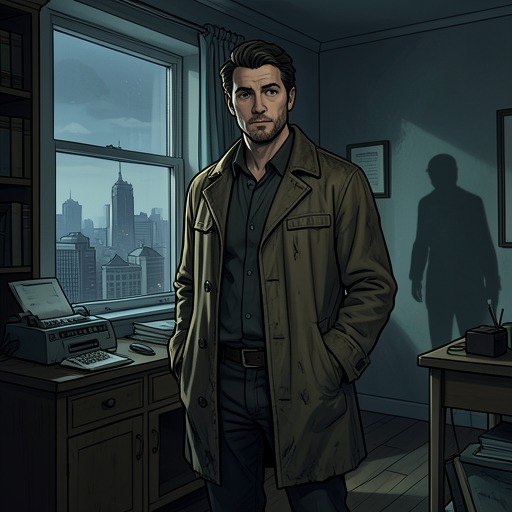
The Dog StarsThe Fear is the name Hig gives to the anxiety that organizes survival after the collapse: first an overwhelming response to illness and danger, later a quieter presence embedded in the routines that make the plain feel defensible. It does not disappear when the immediate crisis recedes. Instead, it becomes a practiced alertness, a memory of what danger felt like, and a readiness that can be roused by a sound in the night.
Origin in illness and collapse
Hig locates the beginning of the Fear in the period after he was gravely ill with the flu. He describes two straight weeks of fever, including three days at 104 to 105 degrees, and wonders whether encephalitis or something else affected his brain. His account is uncertain about the medical explanation but specific about the aftermath: thoughts that had once belonged together began to feel displaced, depressed, and prone to wandering. He compares them to Norwegian ponies transported to Siberia, animals estranged from their former habitat. The comparison gives the Fear a mental as well as physical dimension: even when Hig considers himself of sound body, he does not entirely trust his own thoughts to stay settled.
The danger is not only remembered illness. Nine years after the flu, Hig understands the world around him as a place where the surviving population is sparse and potentially threatening. The flu killed almost everyone, and the blood disease killed more; the people who remain are, in his judgment, mostly not safe to approach. That assessment helps explain why he and Bangley live on the plain and why Hig patrols every day. The Fear is therefore not simply an inward feeling detached from events. It is bound to a continuing calculation about exposure, concealment, and the possibility of attack.
Vigilance made into routine
Hig’s fear of being trapped indoors shapes where he sleeps. He began sleeping outside because he did not want to be caught inside the house. At first, the practice expressed a lack of confidence in the defenses around him; later, he describes a shared system that has made him more confident. Even with that change, he continues to sleep on the ground behind the berm, under heavy blankets in winter, while leaving the porch light on. These are not signs that vigilance has vanished. They show how it has become a familiar way of arranging ordinary life.
The bulletproof vest Bangley gave him makes that tension tangible. Bangley says it can stop a handgun or an arrow, while its protection against a rifle is uncertain. Hig wears it partly because it is warm, but usually leaves it off in summer. When he does wear it, he feels as though he is waiting for something. He likens that feeling to waiting on a train platform for a train that has not come for months: an expectation maintained long after its object has ceased to seem likely. The vest offers some protection while also making anticipation visible and physical.
Hig’s routines also include Jasper, who curls against his legs beneath his own blanket and whimpers in his sleep. Hig thinks the dog is mostly deaf and no longer useful as an alarm, but he and Bangley do not let Bangley know. The detail complicates the household’s security system: Jasper remains part of the nighttime arrangement, even though Hig doubts the practical value he once had. Fear has not reduced every choice to utility; attachment persists within the defenses.
When the quiet breaks
A nighttime disturbance shows that the Fear can return abruptly even after a long stretch without an incident. Jasper growls, and Hig wakes with his heart pounding. He whispers for the dog to stay and climbs toward the top of the berm. The signs are ambiguous: the sound or smell might belong to coyotes or wolves, animals that have been coming down from the mountains as their numbers recover. Hig would rather encounter either than face a situation requiring him to kill.
His response reveals both preparation and some loss of sharpness. He has to retrieve the rifle from beside a cold, damp tarp and find the night-vision goggles inside an old wool sock. A couple of years earlier, he thinks, he would already have been scanning from the berm with the goggles and one hand on the AR-15. Now he moves more cautiously, loading the rifle before climbing. Jasper stays still, straining toward whatever has drawn his attention. Hig proceeds slowly, hoping the presence will be an animal rather than a human threat.
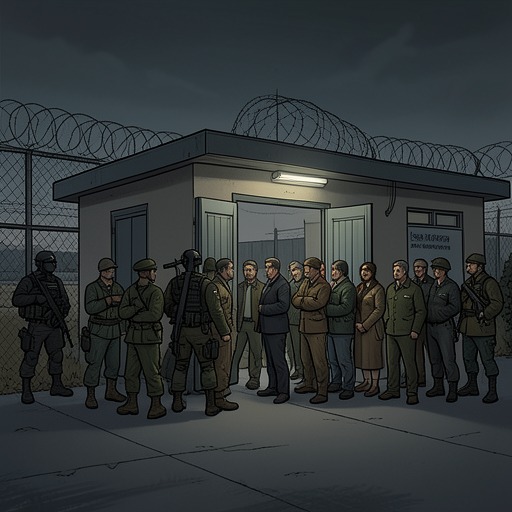
At the berm’s crest, the porch light discloses five men. The scene turns the unseen possibility that has governed Hig’s vigilance into a visible group of intruders. Its tension lies in the interval before recognition: a growl, a search for equipment, careful movement, and finally the light revealing what has approached. The Fear is not proved groundless by the years of relative quiet; this encounter shows why Hig cannot simply set it aside.
Memory, confidence, and continuing threat
Hig says the Fear has become like a memory of nausea: time makes it harder to recall how overwhelming it once was, but he knows how close he came to wishing for death. That comparison marks a change without claiming recovery. His present confidence in the system coexists with knowledge of the earlier extremity, and the ordinary practices of sleeping outside, keeping the porch light on, and remaining prepared preserve a trace of it.
The concept also joins private unease to the wider conditions of the post-pandemic world. The threat may be wolves returning to the region, hidden people, or armed strangers; Hig’s vigilance moves among these possibilities rather than resting on one certainty. His routines allow him to live amid that uncertainty, but they keep the possibility of danger close. The Fear is thus both a burden left by illness and a practical response to a world in which the quiet can end without warning.